|
Vienna & Budapest Trip 2008 4th December 08 - 12th December 08 [2 - Budapest] |
 |
|
|
|||
|
|
|||
|
|
|
|
Departing Vienna for Budapest Having flown in to Bratislava on the Friday evening and stayed with Markus and Bibi, my Hungarian friend Zoltan arranged to fetch me at 09h00 the Sunday morning from the apartment but his departure and that of Zita from the hotel had been delayed. Bizarrely, the proprietor of the hotel had not expected anyone to check out that early, it seemed and reluctantly came in to sort it out. Markus came downstairs to where I had been waiting at the bus stop to inform me, so I ended up returning to the flat until Zoltan and Zita arrived. We headed on the highway towards Hungary but made a detour to Hévíz, near Lake Balaton, geographically, in western Hungary, south-west of Budapest. It is one of Europe’s most famous thermal spa towns, as it is built around Europe’s largest naturally thermal lake. The word Hévíz actually means hot bath in Hungarian and the main spa on the lake was established over a hundred years ago. It has undergone major development and refurbishments over the years. Aesthetically at least, it hasn’t changed much in the last century. We are told that swimming in the lake is quite an experience as the water is comfortably warm. Well, on this day it was really cold outside so it only the bravest would venture beyond the waters not enclosed by a roof. The lake is known in Hungary for its medicinal qualities and contains minerals including sulphur and radon, though it remains to be seen if there are indeed any significant health benefits. I didn't have a towel so we hastily bought one at the shop adjacent to the parking area near the spa. I enjoyed the couple of hours we spent relaxing there. Refreshed, we pressed on and stopped for dinner at Fék Kávéház Étterem (restaurant) on Pacsirta utca (street) near (Balatonakali) Lake Balaton. |
|
|
|
|
|
|
|
|
|
|
|
| Upon arrival in Budapest, we stopped at a computer warehouse complex on the outskirts still open for late night shopping. Zoltan decided I needed a new mobile phone and so an early Xmas present arrived in the form of a basic Nokia. Zoltan dropped Zita off at her parents flat and we stayed for tea and cake. They had been renovating their flat and the sight of furniture, paintings and boxes packed with all sorts of ornaments led me to ask the logical question as to whether they were in the process of moving in or moving out. Well, this brought the house down and I believe they still talk about it to this day. Zita's father was once a Hungarian diplomat abroad and they seemed really kind people. We activated the mobile phone. I had anticipated spending a fair amount of time at the thermal baths of Budapest, yet nothing would prepare me for the unpleasant events that would unfold later in the week. |
|
|
|
|
|
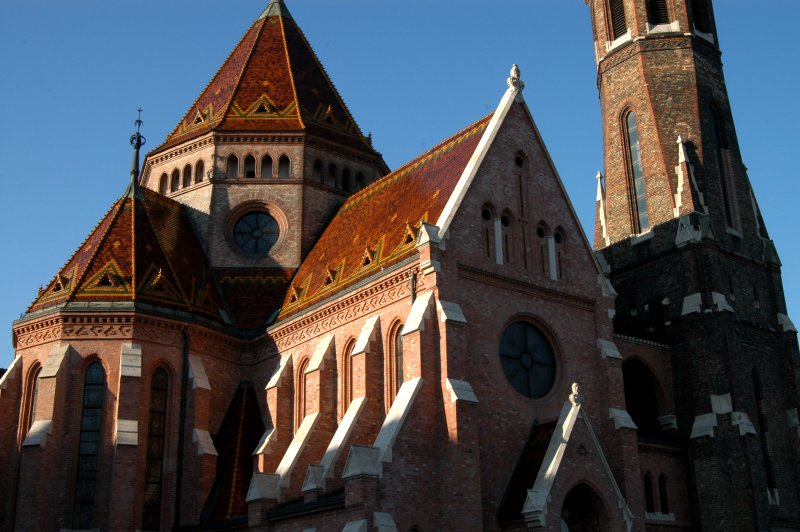
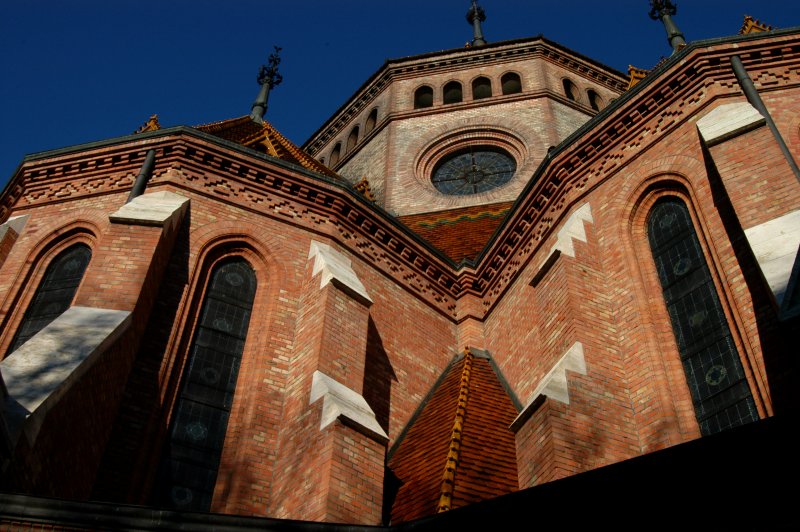
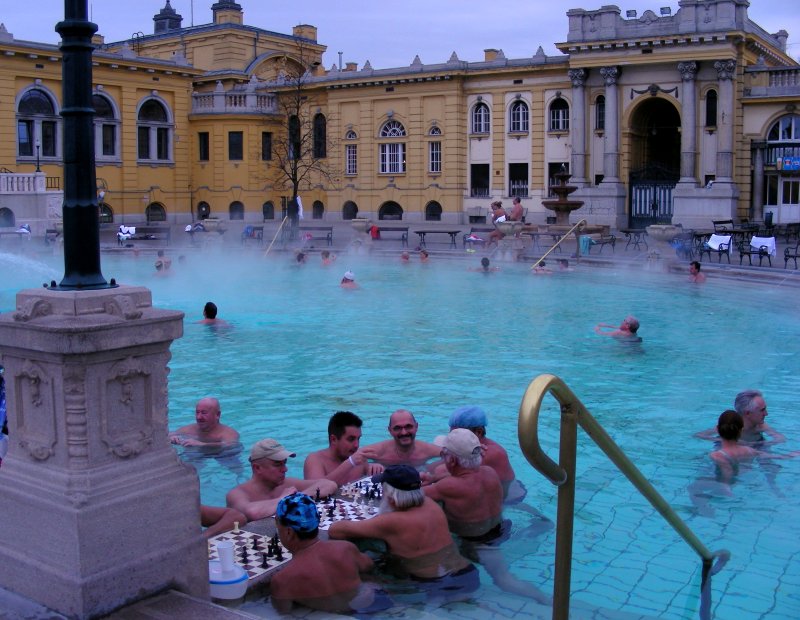
| Zoltan had made a spare car available for me to use for the duration of my stay in Budapest and so on Monday morning, I drove along the banks of the Danube and found a parking spot a convenient distance from the city centre on the Buda side. It was a glorious day, so I sauntered along the river bank taking photos, particularly the beautiful Reformed Church, a Calvinist church, on Szilágyi Dezső tér in District 1 on Buda, with it's Neo-Gothic style and brickwork. I ended up at Inversium Café in the city centre, owned and run by Zoltan's niece Zsuzsanna. Sadly, it has since closed down, being a highly competitive business in a city like Budapest. She had become a mother just recently so she wasn't in at the time; instead, her partner was on duty. The café had been beautifully kitted out but I found the pouf-style seating a tad uncomfortable. I left only to return later around 18h00 to meet Zoltan. From there we headed off to the Széchenyi Bath and Spa. Located on the Pest side, it was established in 1881 as Budapest's first thermal bath, at the time only a temporary establishment known as "Artesian Bath". In 1913 it was converted into a permanent bath. The year of 1999 saw a complete reconstruction of the swimming pools. On a previous visit we had been to Rudas Baths on the Buda side, which date back to 1550, where some of the Turkish-period features are still used today. We stayed at Szechenyi till closing time around 22h00. |
|
|
|
|
|
|
|
|
|
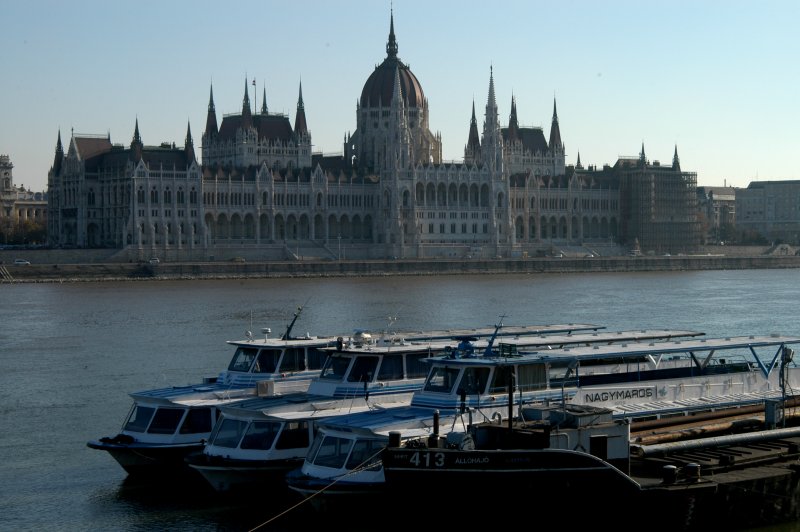
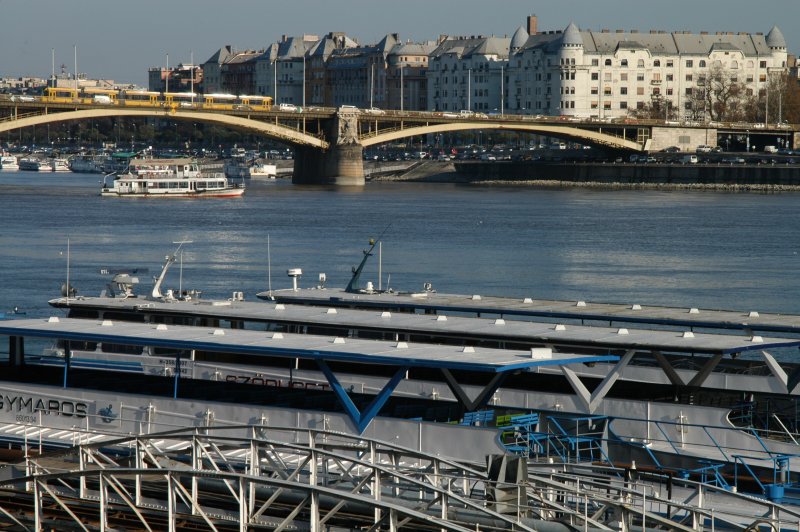
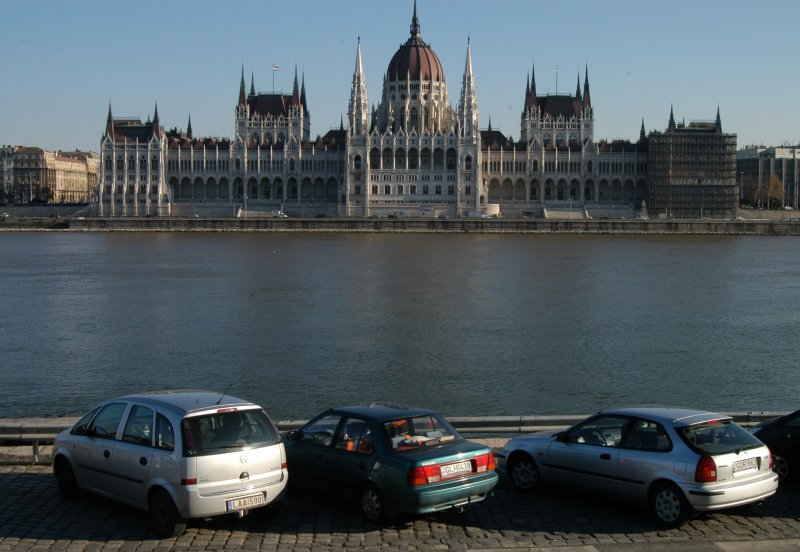
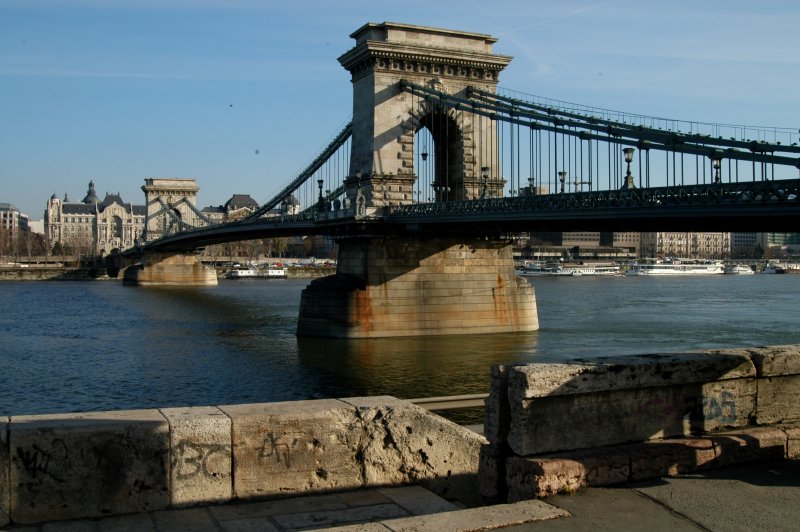
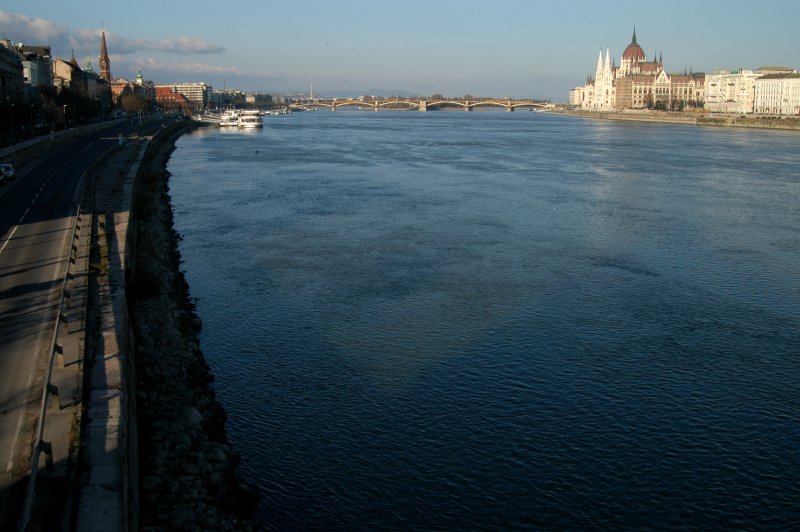
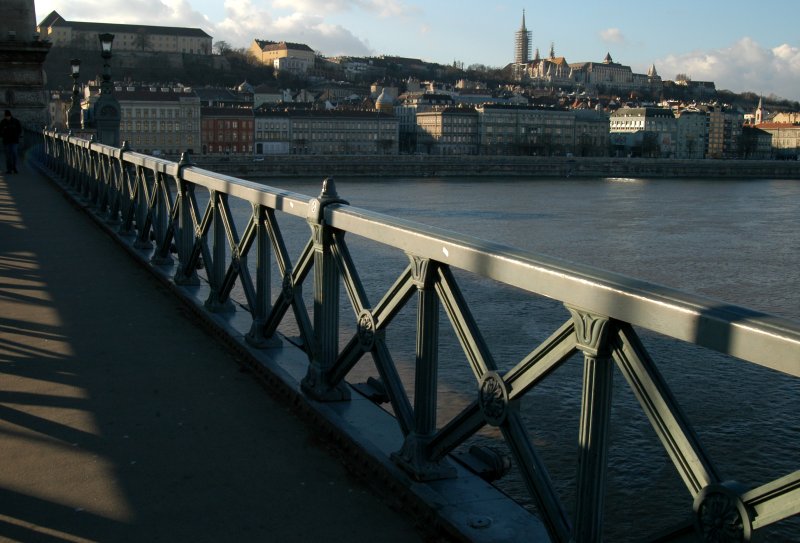
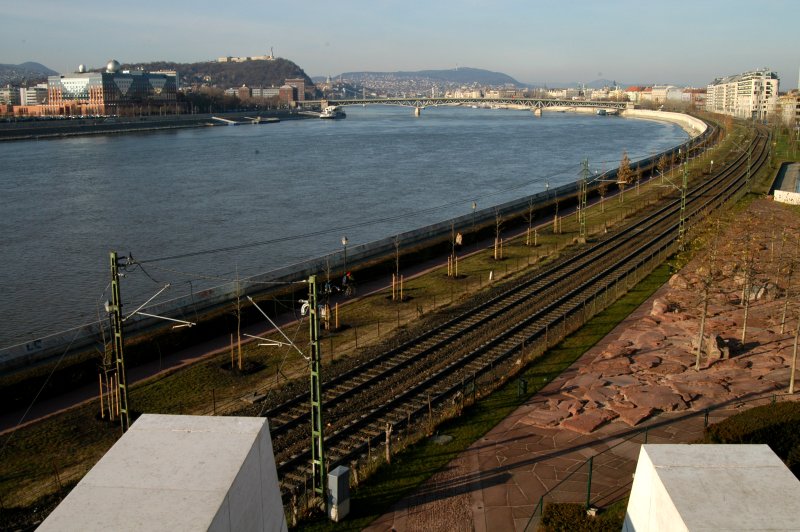
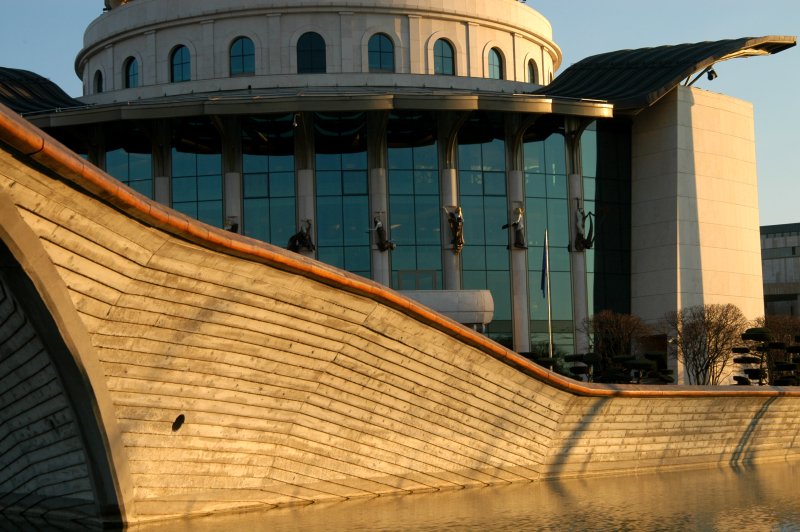
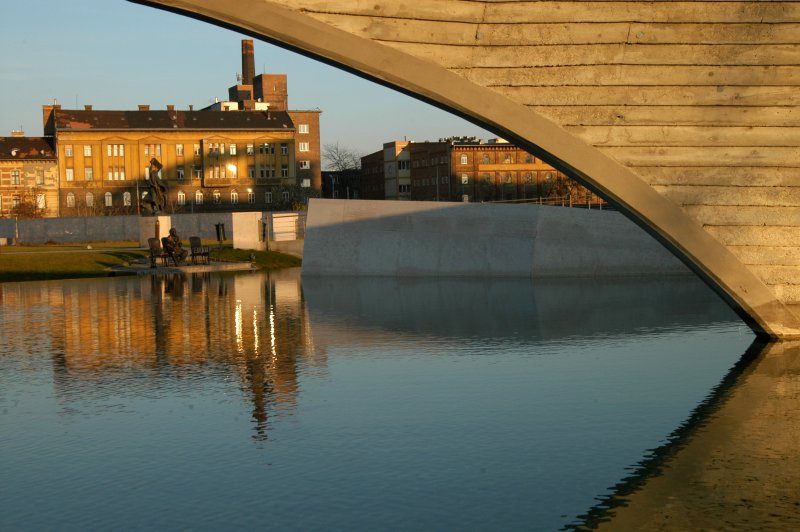
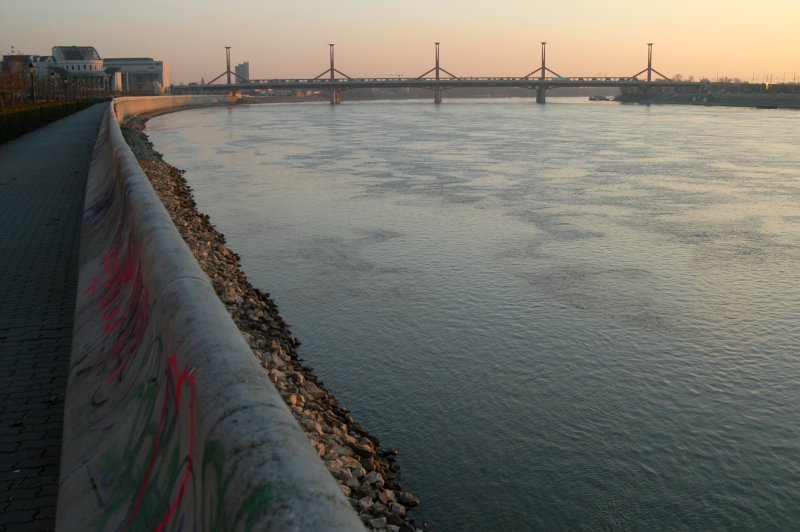
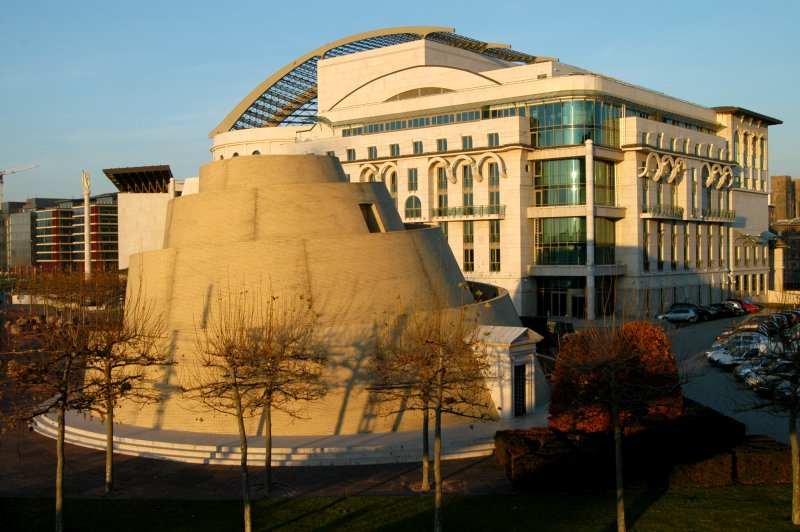
| Zita had invited me the next day to her offices at Vodaphone, where she was currently on contract, for lunch. Parking in roughly the same spot as the day before, I set out on foot after leaving the car near Margaret Bridge (which crosses over to Margaret Island) and having to walk to Széchenyi Chain Bridge with the Hungarian Parliament building between the two on the Pest side. I had not realised how far I still had to go, still having to walk all the way to Erzsébet Bridge and Liberty Bridge (Szabadság híd), so I hastily called Zita to inform her that I would be late. It was only at Boráros tér, after crossing Petőfi Bridge, having covered about 6km, that I finally caught a tram to the offices, located in front of the new National Theatre building. We had lunch in the canteen and took a walk to the theatre at Bajor Gizi park, which lies adjacent to the Danube close to Lágymányosi Bridge. Whether you like the building's architecture or not is a purely subjective opinion. The former Hungarian National Theatre building, which used to stand on Blaha Lujza Tér, was blown up by the Neo-Stalinist regime in 1965 but the newer building contains references to the old one. There one would also find an unusual spiral stone tower (not too tall) with a walkway leading to the top. |
|
|
|
|
|
|
|
|
|
|
From Boráros Tér, I took a
tram back to where the car was parked. I drove to the
Széchenyi
Bath and Spa and
stayed there from 17h00 to 20h00. I headed back and walked from Buda to
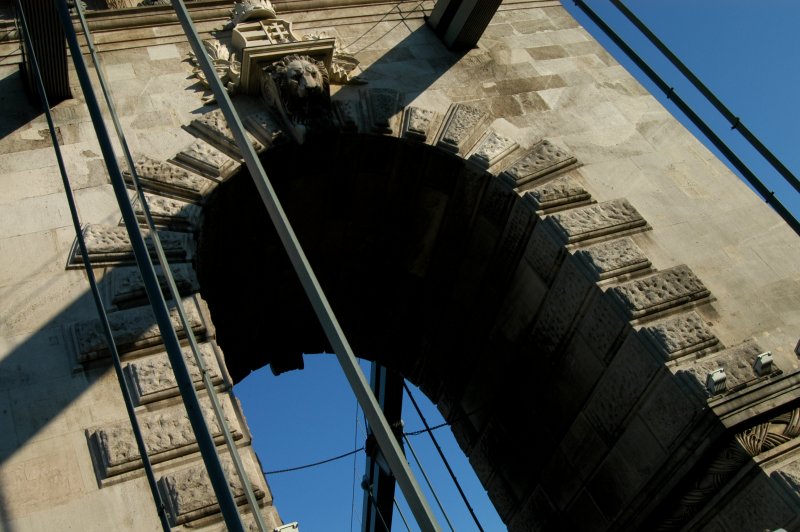
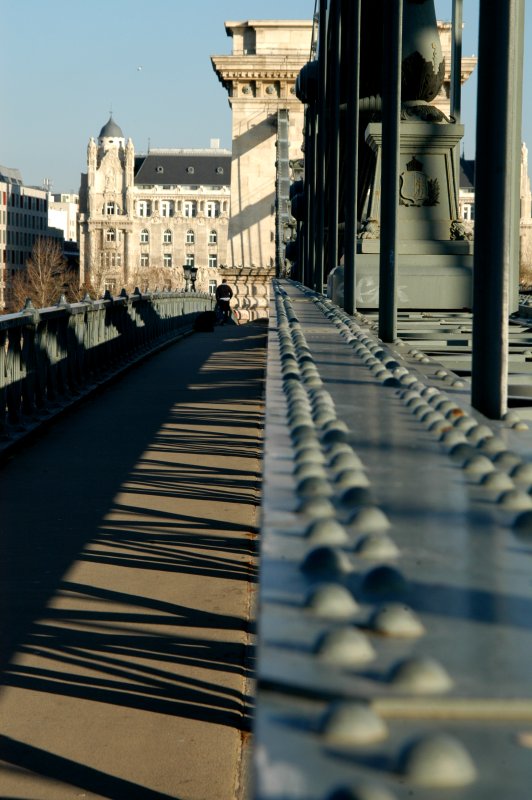
Pest, taking photographs of the Chain Bridge and
Saint Stephen's Basilica, now lit
up, along with a number of other buildings including the Parliament, an
impressive sight indeed. It was then that an incident occurred that spoilt
the rest of my stay in Budapest and result in my having second thoughts
about visiting the city in the future, for a while at least. I was on my way
back to the car.
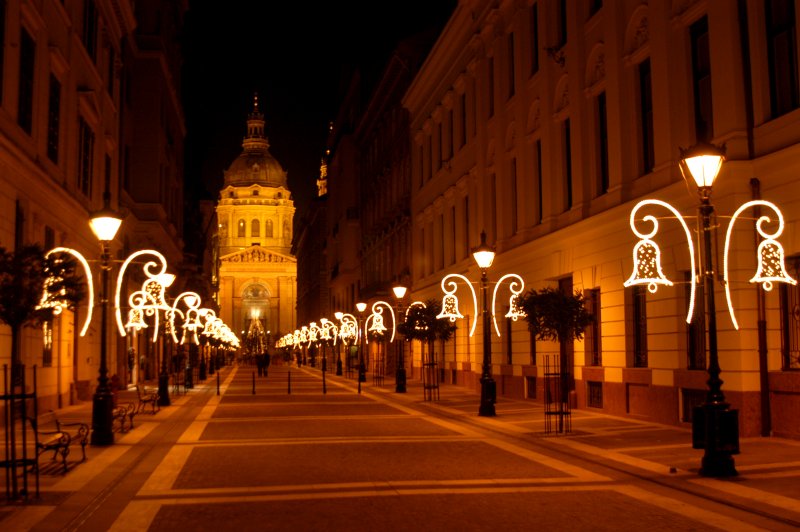
My guard was down, as I was still pretty chilled out from my earlier visit to the baths. Walking down the pedestrian-converted Váci utca in the central business district (CBD) of Budapest near the Budapest Marriott and Mercure hotels, I was stopped by two girls walking in the opposite direction (they introduced themselves as Eva and Zsuzi). At first I did not catch on what the one said until she repeated the claim that they had seen me at the baths earlier in the day. An obvious ploy to engage me in conversation, their next step worked to a treat. They lured me to a restaurant just around the corner in Régiposta utca. Városközpont Étterem (restaurant) in the Budapest V district, address given as Váci utca (street) 16 for some reason, is accessible by outside elevator in Régiposta utca. Two hours later, after the girls had each had a meal and several drinks had been ordered, the bill was presented and I was requested to withdraw the amount at an ATM just down the corridor from where we were sitting. The ATM declined the transaction, so, accompanied by a waitress from the restaurant, we proceeded to an ATM within a bank just around the corner, where I withdrew and handed over the money. The fact of the matter is that, at the time, I had not realised how much I had withdrawn such a large amount, given that £1 is equivalent to roughly 300 HUF. When I told Zoltan the next morning what had happened, he was livid! This is not some seedy backstreet strip club but a plush restaurant in the heart of Budapest CBD! Budapest restaurant and nightclub scams are rife, to the extent that American Embassy Trip Advisor websites carry clear warnings and in fact list the restaurant in question amongst other establishments of a more dubious nature. |
 |
|
|
|
|
|
|
|
|
|
|
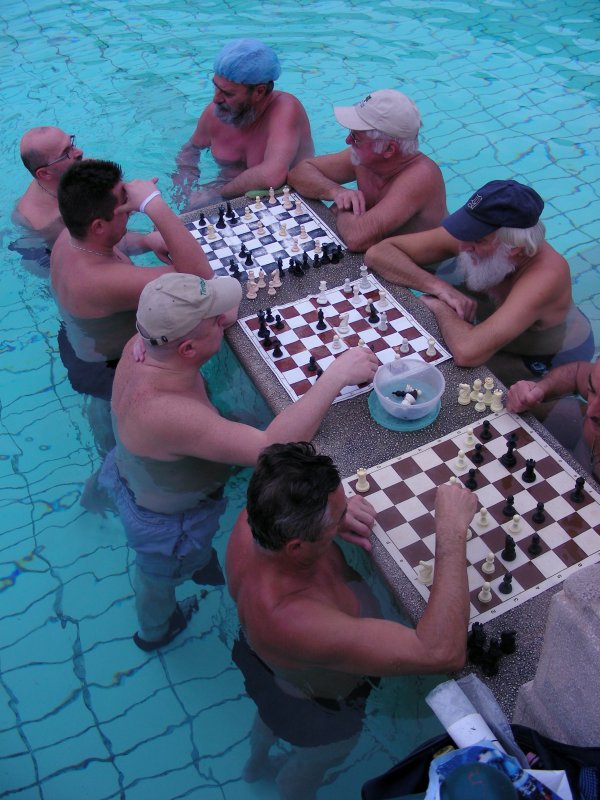
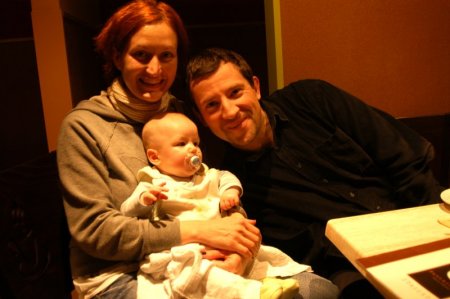
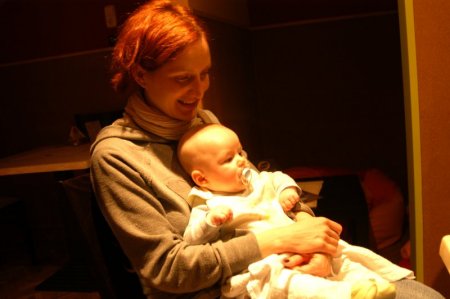
| The next day I walked into the city and spoke to someone at the bank where I had withdrawn the cash. I had subsequently written to the British Embassy, the Hungarian Police and Hungarian Tourist Authority, the latter of whom replied several months later after having conducted their own investigation; however, nothing came of it. In the evening Zoltan and I drove to Széchenyi baths yet again, meeting up with Zita and a colleague of hers from England, Amanda, where we stayed till closing time. Thursday morning, the penultimate day of my departure, I drove to the baths yet again and spent up to three hours there. I found it hard to put the unsavoury incident of two days ago out of my mind. I ordered a massage and watched a group of elderly men, regulars at the baths, play a game of chess in the large pool. It was a delightful scene which I was fortunate to have captured on camera. Upon his return in the evening from the office, Zoltan took me his favourite restaurant Klassz at Andrássy út 41 in the city centre, where we enjoyed a sumptuous meal. Later Zoltan and I met Zita at Inversium. Zoltan's niece Zsuzsanna had brought along her baby to show to us. Zoltan and I then drove to the main rail station in Budapest around midnight, where I bought my rail ticket to Brno, from where I would catch my return flight to Stansted. |
|
|
|
|
|
|
|
|
 |
 |
|
|
|
|
|
|
|
|
| Some Geography from wiki: The 525 km2 area of Budapest lies in central Hungary surrounded by settlements of the agglomeration in Pest county. The capital extends 25 km in the north-south and 29 km in the east-west direction. The Danube enters the city from the north; later it encircles two islands, Óbuda Island and Margaret Island. The third island, Csepel Island, is the largest of the Budapest Danube islands, however only its northernmost tip is within city limits. The river that separates the two parts of the city is only 230 m (755 ft) wide at its narrowest point in Budapest. Pest lies on the flat terrain of the Great Plain while Buda is rather hilly. Pest's terrain rises with a slight eastward gradient, so the easternmost parts of the city lie at the same altitude as Buda's smallest hills, notably Gellért Hill and Castle Hill. The Buda hills consist mainly of limestone and dolomite. The highest point of the hills and of Budapest is János hill, at 527 meters above sea level. The lowest point is the line of the Danube which is 96 meters above sea level. |
|
|
|
 |
 |
|
|
|
|
 |
|
Zoltan's hospitality and generosity is second to none and nothing is too much for him to arrange. It's a shame really that I was the victim of a scam on this occasion. Thinking about it I still get the shudders. It's a shame that I am left with the proof that though there is good in humanity in the form of Zoltan and his kind, there are unfortunately a fair proportion of scumbags out there out to make one's life a misery. |
|
|
|
[Europe] |
|
|
|
Links to other websites: |
|
|
|
|