|
As we returned to view
the water gardens, it began to rain quite heavily for a short while. We
followed a path known as the High Ride, that led to the upper levels of
the garden, where we reached Anne Boleyn's seat and the decapitated
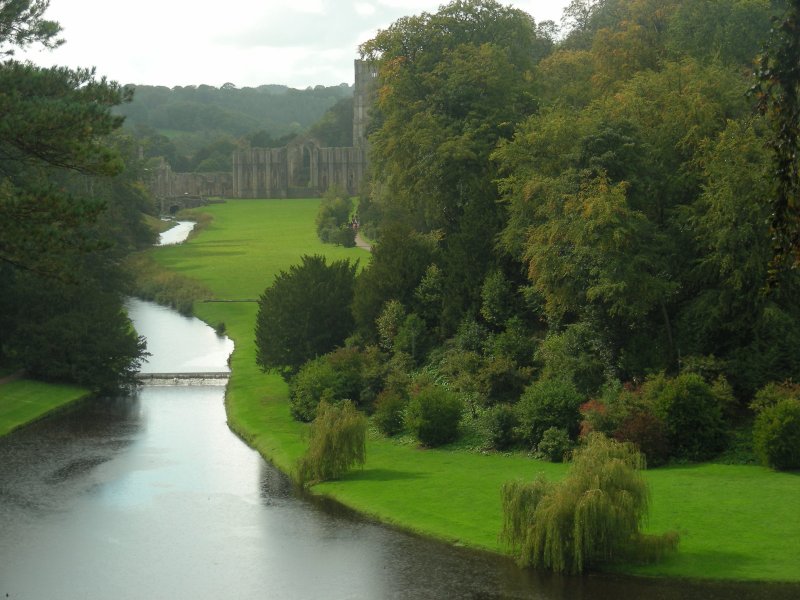
statue behind it. From this point, the view of the garden, known as
"Surprise View" and the River Skell with the ruins of the abbey in the distance is simply
breathtaking. One can almost not believe that this property could have
been the playground, the place of fantasy, for several generations of
one single solitary privileged family, at the time the Elizabethan
gardens were created. The Temple of Fame, one of the numerous follies within the
gardens, lies further on along this walk. No sooner had we reached the
lower ground via the Serpentine Tunnel than the sun was out again.
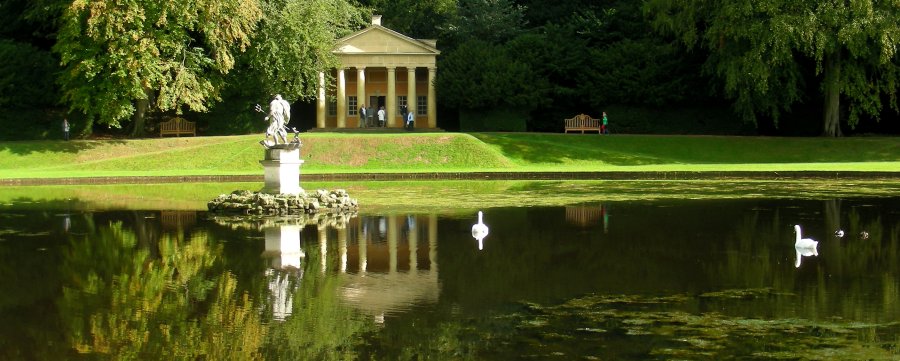
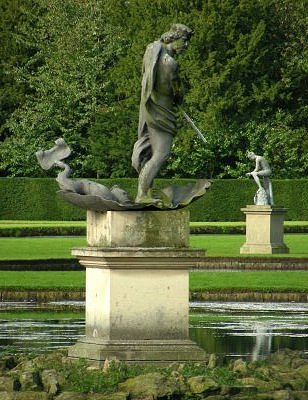
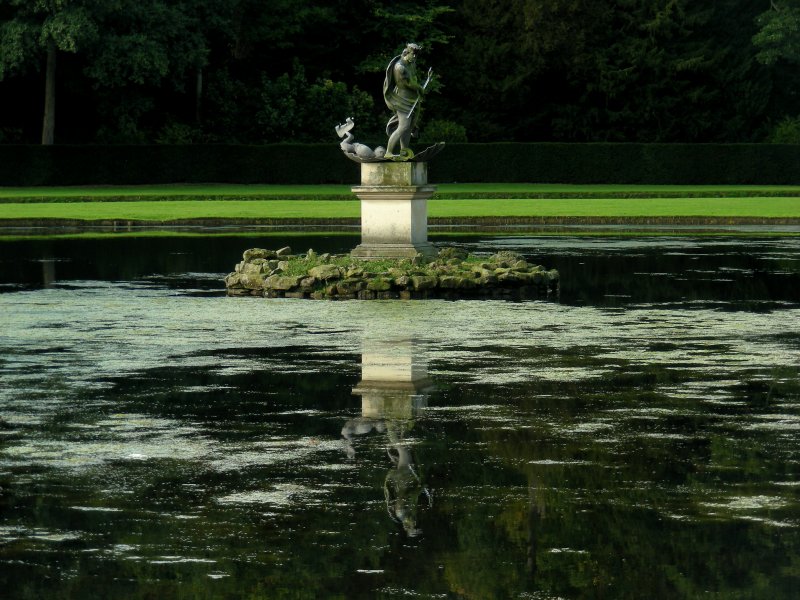
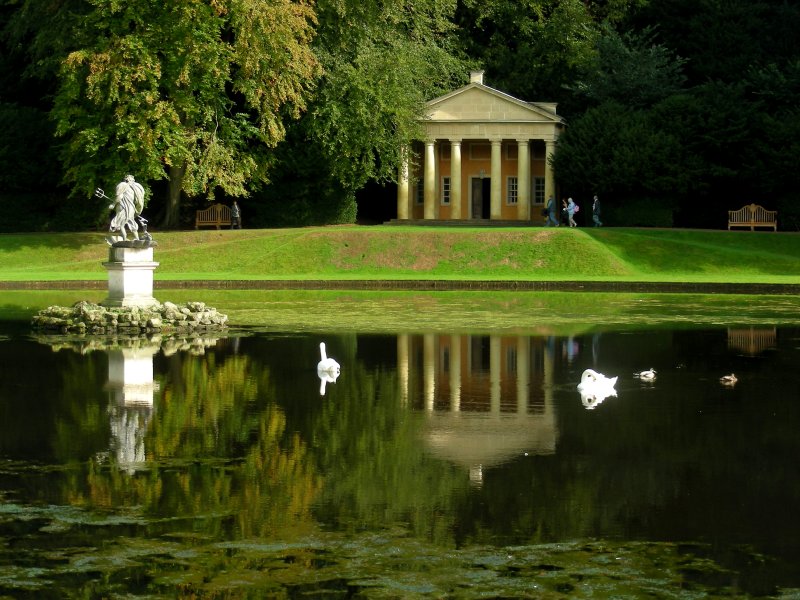
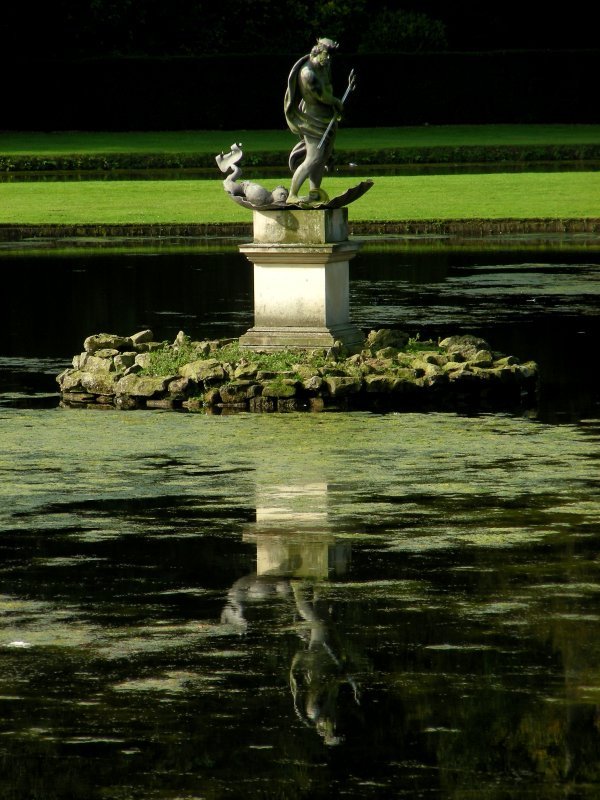
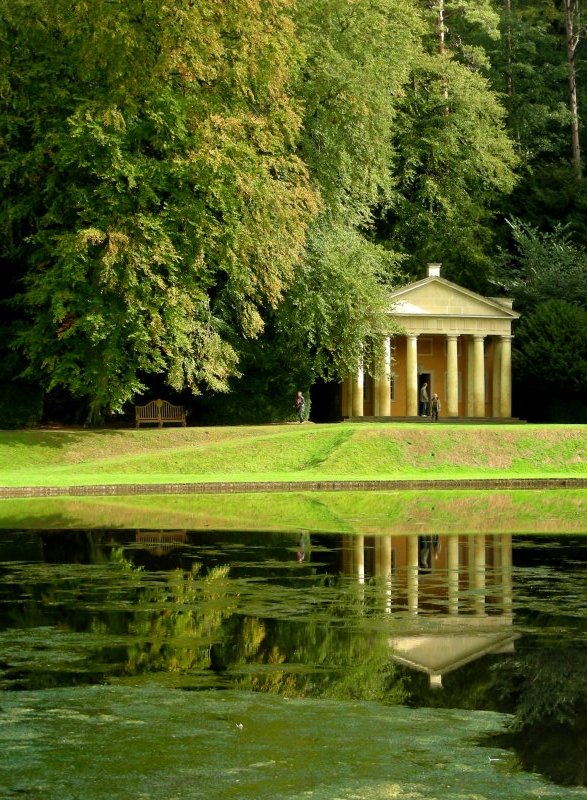
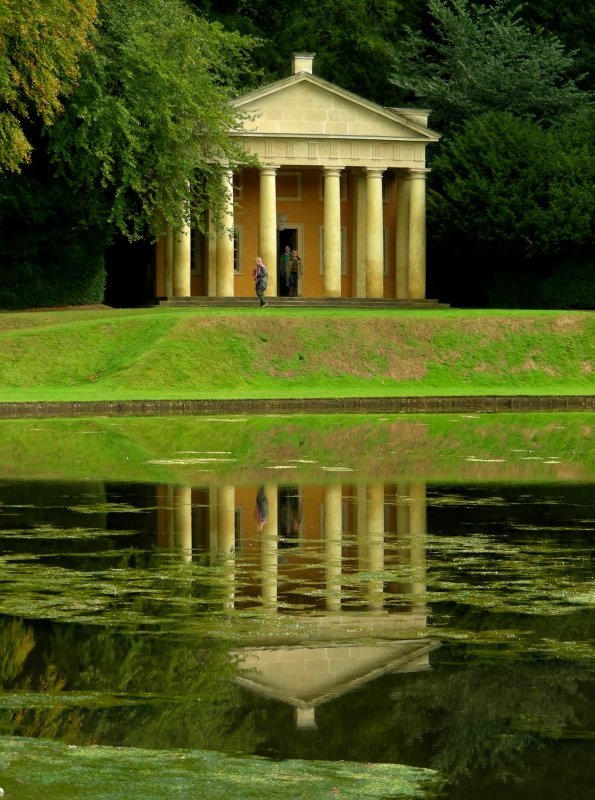
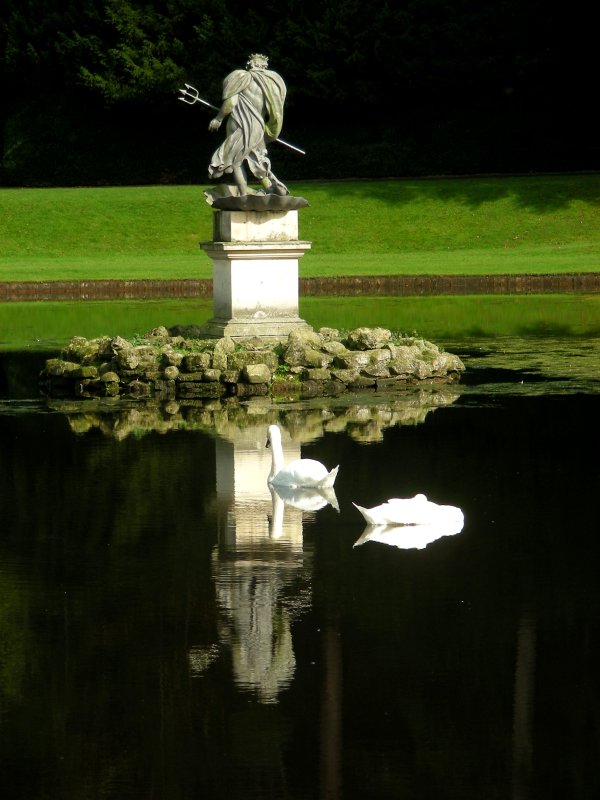
Crossing the Rustic Bridge, the Temple of Piety and the Statue of
Neptune, the God of Water, reflect in the centre of the Moon Pond adorned with
water lily plants, whilst a pair of swans drift languidly in
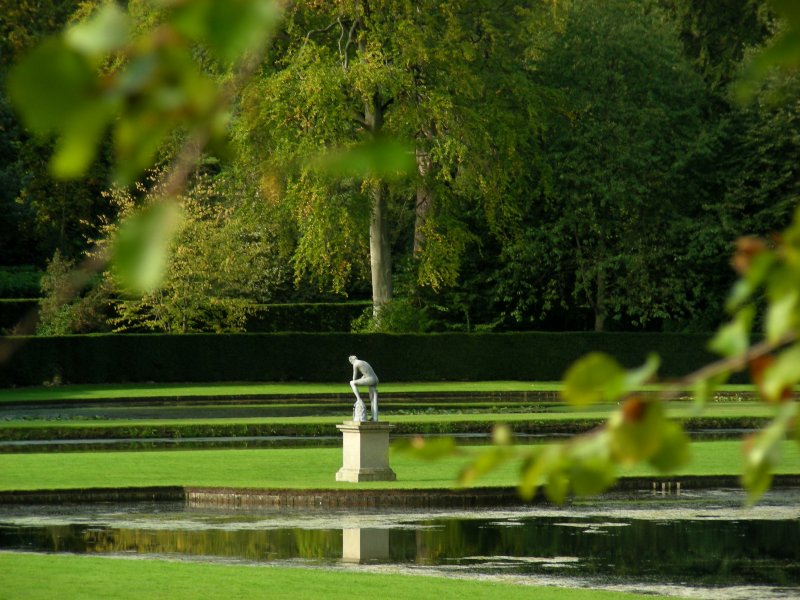
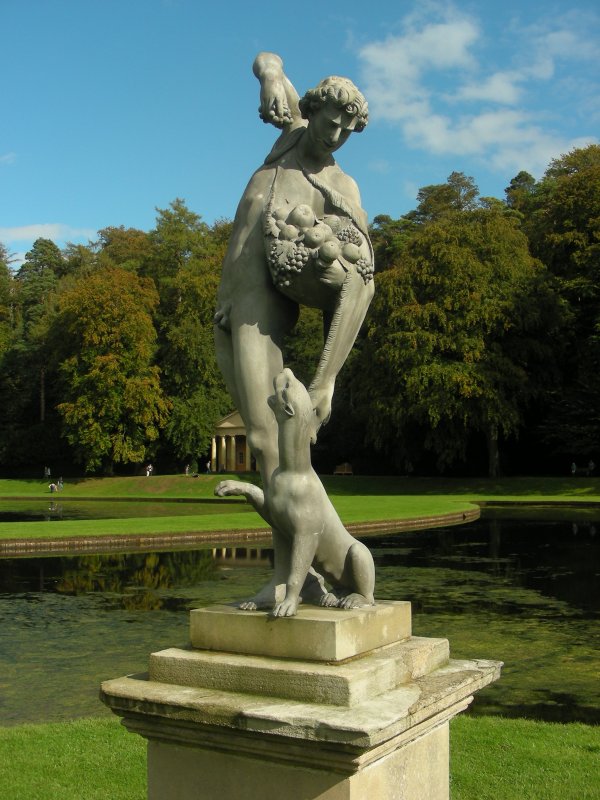
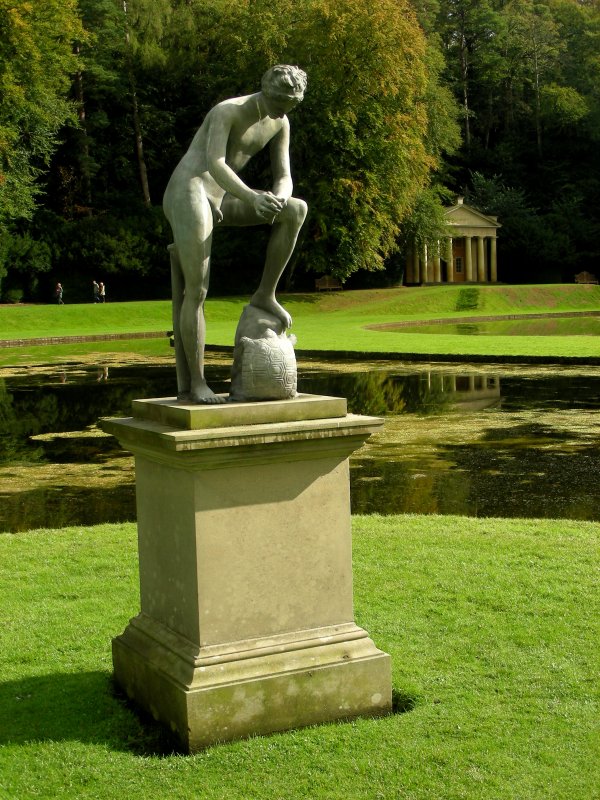
its still waters. On its edges stand the statues of Dionysus, the god of
wine and inspired madness, also known as the Roman God Bacchus and Galen of
Pergamon (modern-day Bergama, Turkey), a prominent Roman physician, surgeon and
philosopher. After tea at
the entrance to the inner sanctuary, we left Studley Royal around 15h00,
heading south once again along the A1(M), an end to a worthwhile weekend
of walking that simultaneously offered us a variety of historical,
geological and cultural interests. |
|
 |
|
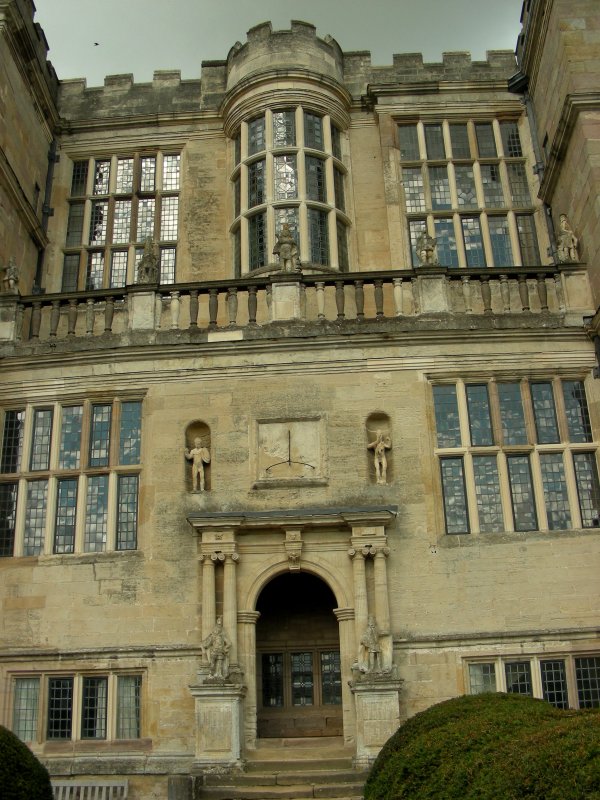
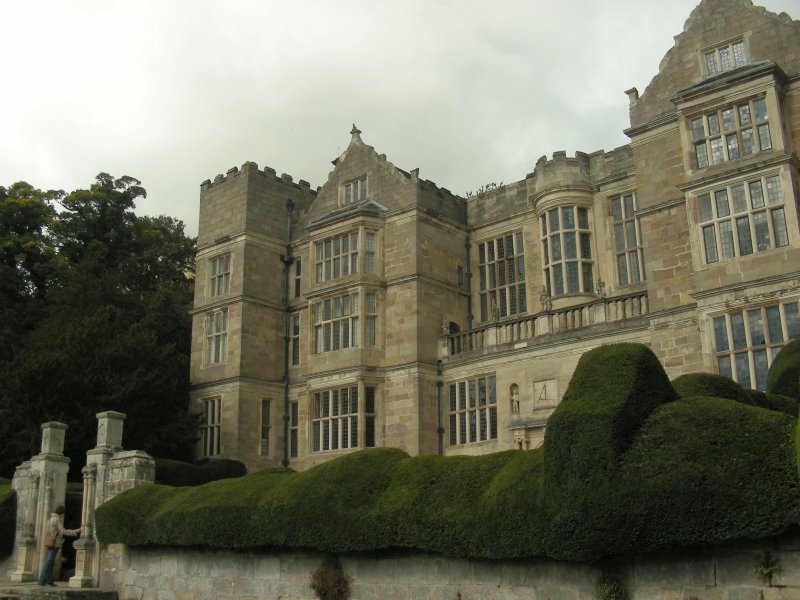
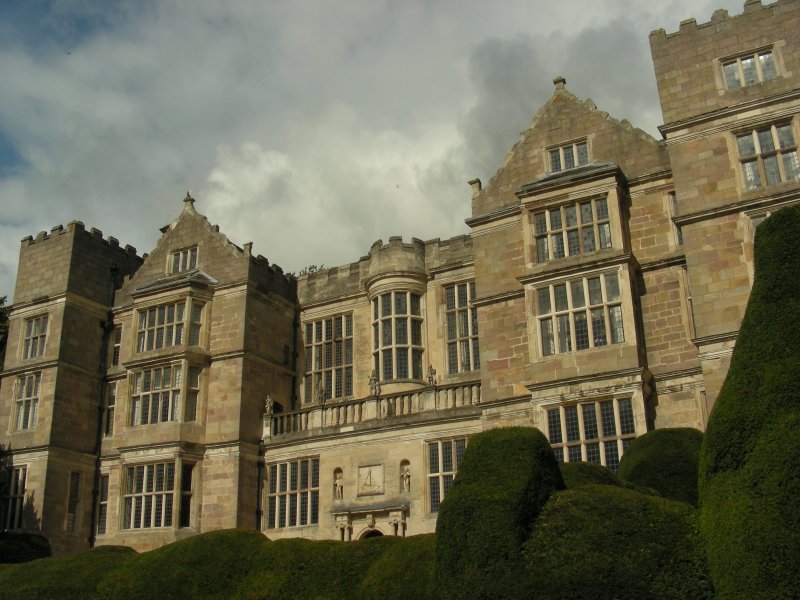
Fountains Hall, built between
1598 and 1604. |
|
|
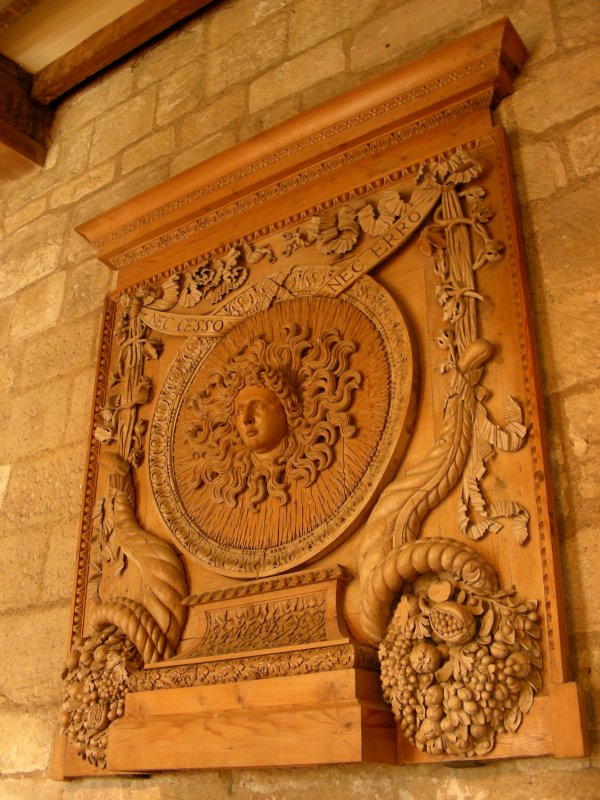
A 300 year
old pear wood carving in Fountains Hall, originally from Studley Royal
Hall, destroyed by fire in 1946. The motto "Nec Cesso, Nec Erro"
translates as "I won't rest, I won't stray.";
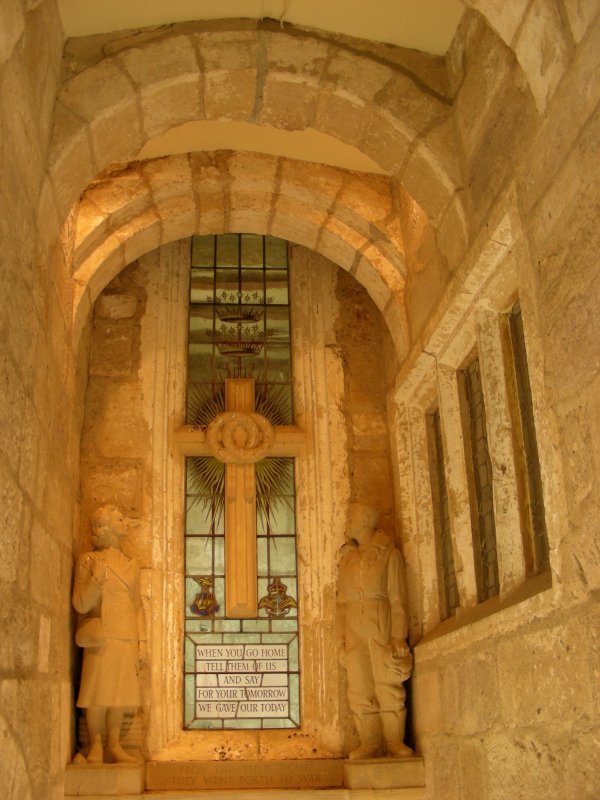
The Vyner Memorial Window in the entrance staircase. |
|
|
|
Fountains Hall
is a country house built by Stephen Proctor between 1598 and 1604,
partly with stone from the Abbey ruins. It is a fine example of late
Elizabethan architecture. After Proctor's death in 1619, Fountains Hall
passed into the possession of the Messenger family, who sold it to
William Aislabie of neighbouring Studley Royal one hundred and fifty
years later. Fountains Hall became virtually redundant as the Aislabie
family remained at Studley Royal. It was leased to various tenants and
at one time parts of it were used for farm storage. However it was
renovated and modernised between 1928 and 1931, and the Duke and Duchess
of York (later King George VI and Queen Elizabeth) often stayed there as
guests of Lady Doris Vyner, wife of the Marquis of Ripon and sister to
the then-current Duke of Richmond and Gordon.
During the Second World
War, Fountains Hall and other estate buildings were used to house
evacuees.During the war the Vyners lost a son and a daughter; Charles
was a Royal Naval Reserve pilot missing in action near Rangoon.
Elizabeth was a member of the Women's Royal Naval Service and died of
lethargic encephalitis while on service in Felixstowe, Suffolk. There is
a sculpture remembering them which can be seen as one comes out of the
house down the stone stairs.
WHEN YOU GO HOME TELL THEM
OF US AND SAY FOR YOUR TOMORROW WE GAVE OUR TODAY
FROM THIS THEIR HOME, THEY WENT TO WAR.
After the war the Hall
again fell into a state of serious dilapidation. The National Trust
acquired the Fountains Estate from North Yorkshire County Council in
1983 and has been undertaking restoration work on the Hall since then.
Part of it has been divided into flats, one of which is available for
holiday lets. Visitors to Fountains Abbey can view the oak-paneled Stone
Hall and an adjoining exhibition room, and there are plans to restore
the chapel. |
|
|
  |
|
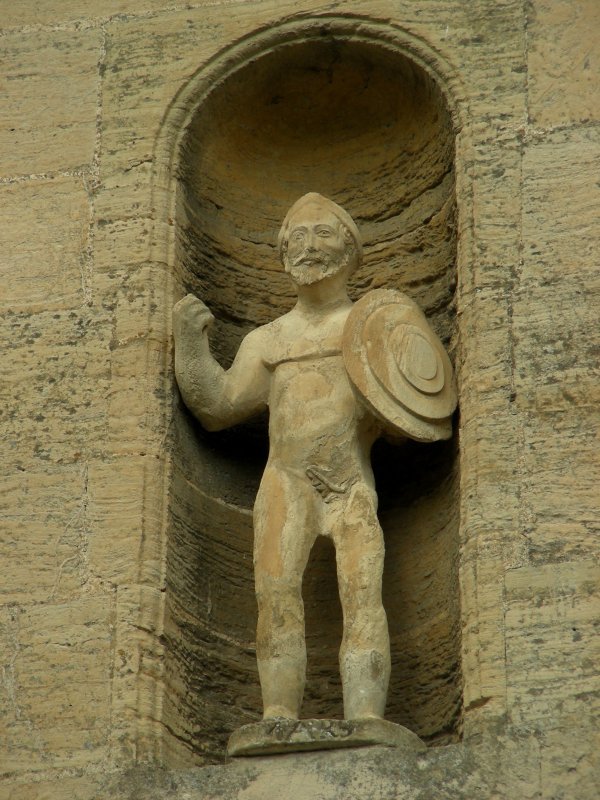
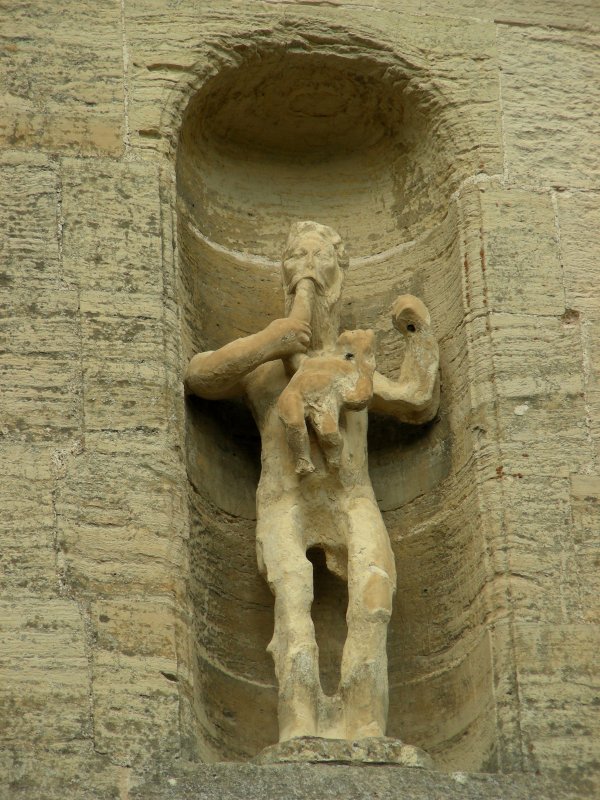
The
statues on the facade of Fountains Hall depicting Mars, God of War and
Saturn devouring one of his children. |
|
|
|
Constructed with stone from the Abbey ruins, Fountains Hall is a fine
example of late Elizabethan architecture, |
|
|
|
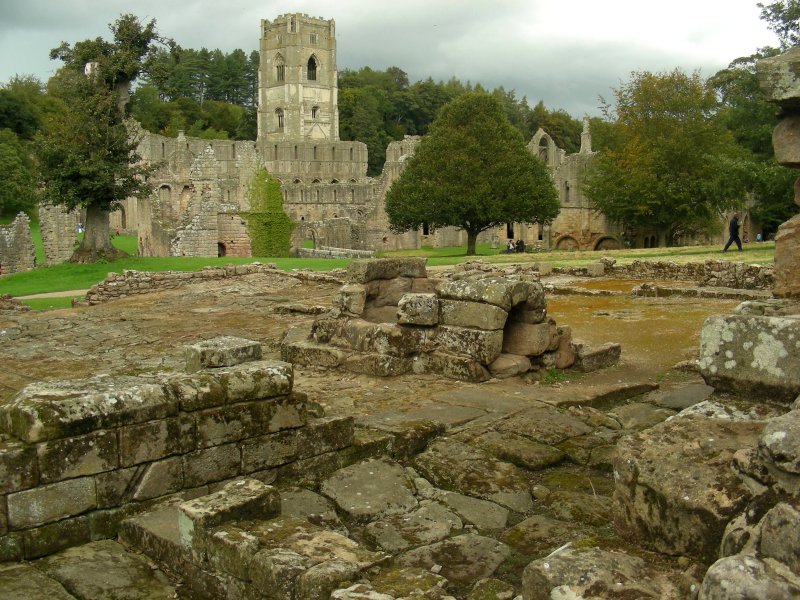
View of Fountains Abbey from the
direction of the guest-houses. A water well can clearly be seen. |
|
|
|
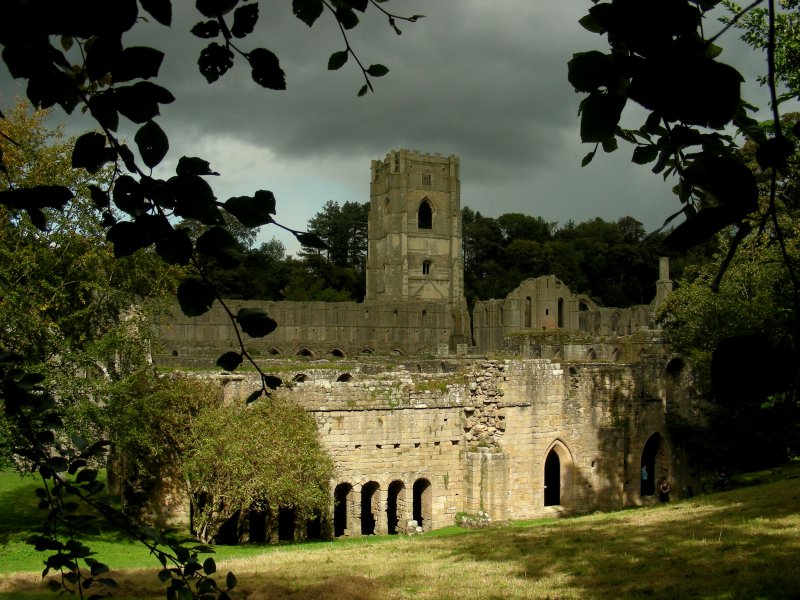
View of the south-west corner of
Fountains Abbey, location of the necessaries (V), above the
swiftly flowing stream. |
|
|
|
"Surprise View" - overlooking the
River Skell and Fountains Abbey, as viewed from High Rise. |
|
|
|
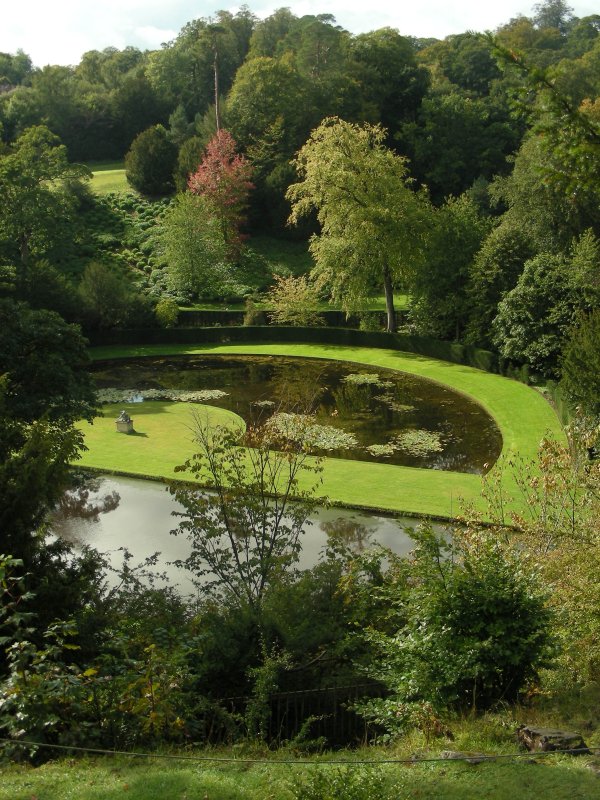
Temple of Fame; View of a half-moon
pond from High Rise, Studley Water Royal Gardens. |
|
|
|
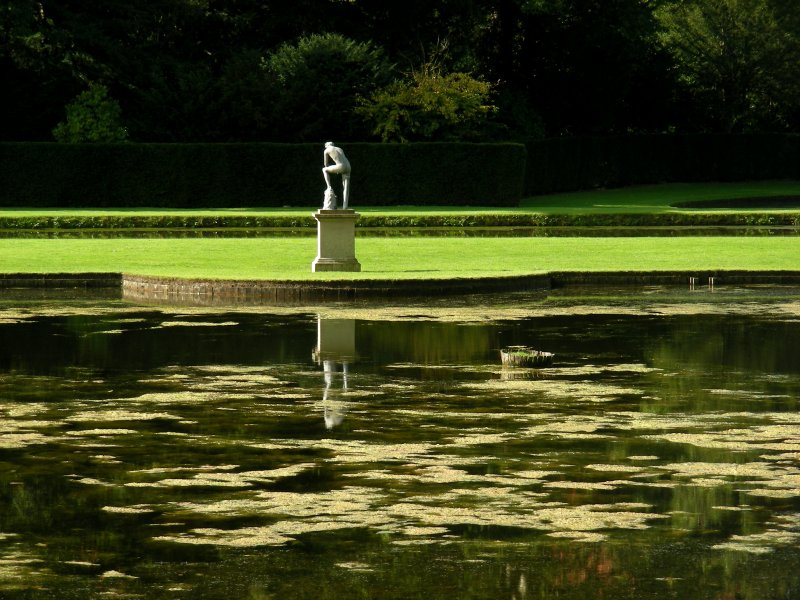
Statue depicting Galen of Pergamon
(modern-day Bergama, Turkey), a prominent Roman physician, surgeon and
philosopher. |
|
|
|
The Statue of Neptune, the God of
Water, in the centre of the Moon Pond, Studley Water Royal Gardens. |
|
|
|
The Statue of Neptune and Temple of
Piety, |
|
|
|
The Statue of Neptune in the centre
of the Moon Pond; Dionysus, the god of wine and inspired madness, also
known as the Roman God Bacchus. |
|
|
|
Studley Royal Water Garden
is one of the best surviving examples of a Georgian water garden in
England and was created by John Aislabie, who inherited the Studley
estate in 1699. A socially and politically ambitious man, he first
became the Tory Member of Parliament for Ripon in 1695 and in 1718
became Chancellor of the Exchequer. In 1720 disaster struck. Aislabie
was a principal sponsor of the South Sea Company scheme, the bill for
which was promoted by him personally. After this vast financial
operation collapsed (the South Sea Bubble), he was expelled from
Parliament and disqualified for life from public office.
Aislabie returned to
Yorkshire and devoted himself to the creation of the garden he had begun
in 1718. After his death in 1742, his son William extended his scheme by
purchasing the remains of the Abbey and Fountains Hall. He also extended
the landscaped area in the picturesque romantic style, contrasting with
the formality of his father's work. Between them, the two created what
is arguably England's most important 18th century Water Garden.
After William's death, the
estate passed to his daughter, then her niece. It escaped major
reshaping and the garden and park passed to the Vyner family,
descendants of the Aislabies. The garden's elegant ornamental lakes,
canals, temples and cascades provide a succession of dramatic
eye-catching vistas. Follies were popular features in Georgian gardens
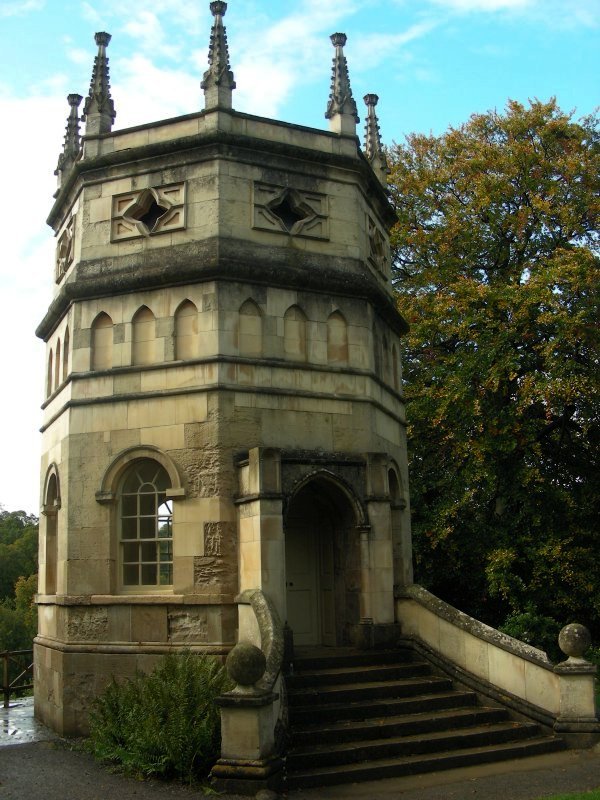
and examples at Studley are the gothic Octagon Tower on its high rocky
outcrop reached on foot through the twisting Serpentine Tunnel, and the
Temple of Fame, a rotunda with wonderful views across the garden
believed to have been used by the Georgians as a picnic spot. Both these
follies are reached by the taking the path known as the High Ride, which
climbs up the valley side and commands magnificent views of the Water
Garden. The climax of the garden tour comes at the end of the High Ride
and is known as "The Surprise View" or Anne Boleyn's Seat. So called
because paintings show that there was a decapitated statue on this spot
before the acquisition of the abbey by Aislabie in 1768. It was during
the late 18th century that the statue acquired the name Anne Boleyn when
a link was seen between the decapitated state of the statue, Henry
VIII's second queen and the dissolution of the monasteries. The statue
was restored to its original position in 2001. |
|
|
|
 |
|
Reflections of the Temple of Piety
and The Statue of Neptune in the still waters of the Moon Pond, |
|
|
|
Galen of Pergamon; The Temple of
Piety. |
|
|
|
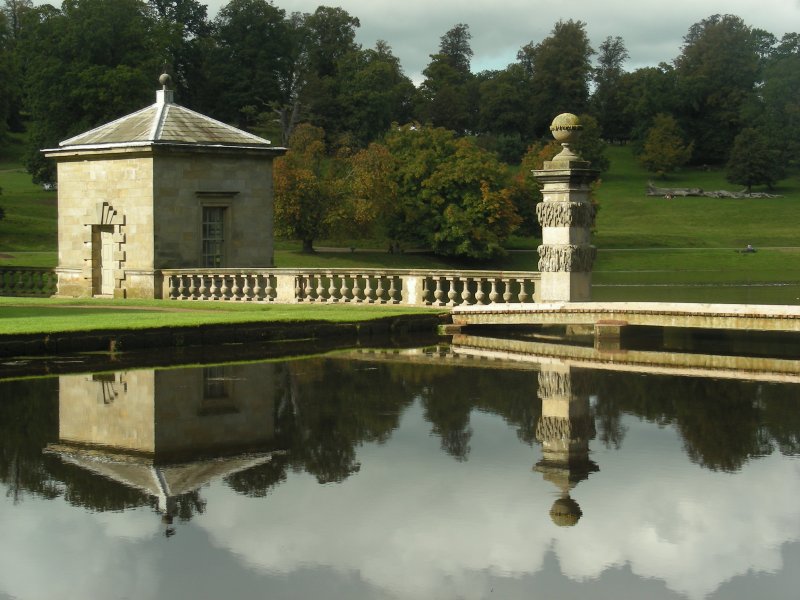
Lakeside, Studley Water Royal
Gardens. |
|
|
|
|
|
|